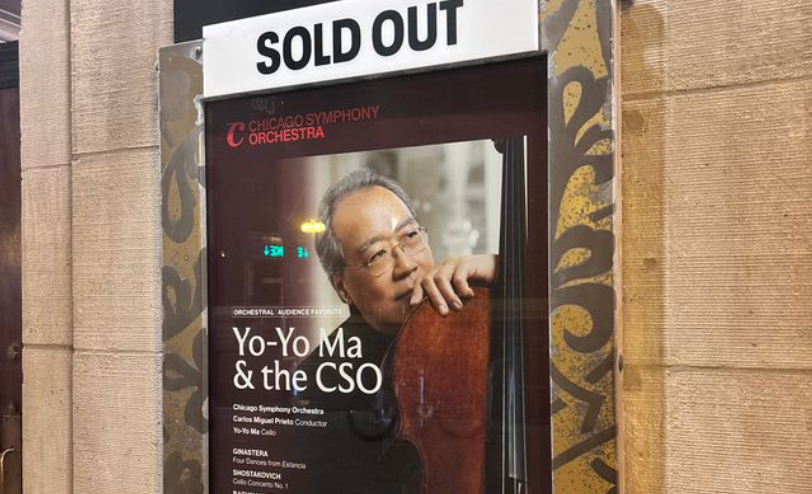
Welcome to SeatGeek Front Row, where music writers share their tips for attending the biggest concert tours around the country. For this edition, longtime Chicago-area entertainment writer Tricia Despres breaks down what it’s really like to see a Yo-Yo Ma performance in person, from the setlist, to what fans wore and everything in between.
I walked into Orchestra Hall at Symphony Center in Chicago on November 11 fully expecting that I would never fit in. But by the end of the Yo-Yo Ma & the Chicago Symphony Orchestra concert, I realized I belonged there.
Little did I know how much.
Because in this world of filters and copycats, artificial intelligence and manufactured moments, what I witnessed on this particular night was nothing short of miraculous. Over the course of two hours, I was reminded of what it feels like to be mesmerized by the sheer talent of a collection of musicians playing at their very highest level.
And it was real.
You could feel it.
The beauty of a solitary note. The pain of a simple pluck on a cello. The moments where my heart skipped a beat and the hairs on the back of my neck stood up through no effort of my own. The beauty of silence. It was all worth the price of admission –– and then some.
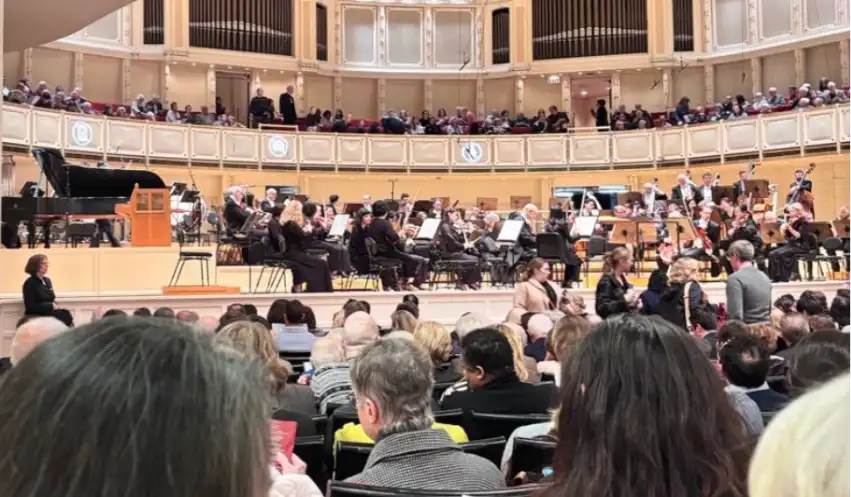
What is a Yo-Yo Ma concert really like?
There are not many times in your life when you walk into a concert 100% sure that you're not only going to love it, but that it's also going to touch you in ways you never expected.
But that’s what attending a Yo-Yo Ma concert is like.
Before the very first note, you know in your soul that you are going to witness something few people get to experience over the course of their lifetime. I was eerily reminded of this early on in the evening, when I became somewhat entranced by the plight of a man who appeared to be in his sixties, with a cane in his hand and two masks covering his face. As he struggled to find his seat, I couldn’t help but wonder what had brought him here on this chilly and rainy November night. Was this simply just another night out at the symphony, or was he hoping to hold the treasure of live music in his hands one more time?
Whatever his story was, he chose Yo-Yo Ma to see.
And if that doesn’t say it all, I don’t know what could.
The quiet moments did come with their share of slight distractions, such as the 30-something guy continuously coughing into his sleeve next to me or the fifty-something woman continuously fanning herself with the program or the 80-something grandma who just couldn’t seem to get the plastic to separate from the mint. But otherwise, during many moments throughout the night, you could hear a pin drop.
And in many ways, the silence was comforting.
Not surprisingly, Yo-Yo Ma didn’t disappoint. While he didn’t utter a single word over the course of his set, he said it all via the cello from which he somehow conjured magic. Frankly, I’m not sure if I was more enamored by the music or his reaction to the music –– as if the sounds coming from his very hands continued to amaze even him, all these decades later. At times, it seemed as if he was lifted from his chair in an almost unfathomable musical ascension occurring before our very eyes. It was powerful and memorable and almost impossible to comprehend.
And I loved every second.
What time does Yo-Yo Ma go on stage?
Precisely at 7:30 p.m., the lights went out and I fully expected that Yo-Yo Ma would take the stage. However, after referring to the program I held tightly in my increasingly sweaty hand, I soon realized that the CSO would find itself solely in the spotlight first, and rightfully so.
The assorted collection of talented musicians began playing Ginastera's Four Dances from Estancia –– or at least that’s what my program said. I was too in awe to even care what they were playing. Come to find out, there were four dances in this one orchestral work, and yes, that was me almost wildly clapping at the mere indication of a pause in the music.
Take it from me –– don’t do that.
I’m not sure if it was the mere sight of CSO conductor Carlos Miguel Prieto seemingly going into convulsions from his musical pulpit or my own bewilderment over watching musicians turn the pages of music written decades ago, yet playing it with the same furor that its composers must have intended, but I was hooked.
It was miraculous, and Yo-Yo Ma hadn’t even taken the stage yet.
But that’s exactly what he did at 7:48 p.m., following a thunderous ovation from the crowd. As he played what cannot be described using words, I felt as if my very brain was undergoing an exercise of epic proportions –– being reminded what it felt like to take in music in its purest form, as if it were coming down from the heavens.
It was so good, but almost impossible to explain.
At 8:26 p.m., Yo-Yo Ma left the stage for the final time after two curtain calls and one solo encore. As the lights came up, people headed for the exits, excited either to get a glass of wine or to finally discuss the absolute insanity of what they had just witnessed –– or maybe, it was a little bit of both.
At 8:48 p.m., the lights went down again, and I couldn’t help but notice that not everyone came back for the night’s final selection scheduled to be delivered by the CSO. Puzzling to say the least, but it was evident that we had seen the last of Yo-Yo Ma, and some simply didn’t want to stick around to see what the night had left in it.
Their loss.
The CSO proceeded to amaze with Rachmaninov's Symphonic Dances, completing the magical night at 9:23 p.m.
What is Yo-Yo Ma's setlist?
To be completely honest, I still have no idea what I just witnessed.
But yes, most people much fancier than me seemed to know exactly what the night ultimately held, either because they were smart enough to look at the program or they knew beforehand that one of their favorite classical compositions was going to be performed by none other than Yo-Yo Ma. And indeed, Ma joined the orchestra for the evening's featured cello concerto.
The November 11 performance at Orchestra Hall included:
Alberto Ginastera — Four Dances from Estancia
The Land Workers
Wheat Dance
The Cattlemen
Final Dance (Malambo)
Dmitri Shostakovich — Cello Concerto No. 1 in E-flat Major, Op. 107 (featuring Yo-Yo Ma)
Allegretto
Moderato
Cadenza
Allegro con moto
Encore: Yo-Yo Ma — Song of the Birds (traditional Catalan melody, arranged by Pablo Casals)
Intermission
Sergei Rachmaninov — Symphonic Dances, Op. 45
Non allegro
Andante con moto (Tempo di valse)
Lento assai–Allegro vivace
What is the stage and production like?
During the entirety of the show, I couldn’t help but marvel at the fact that here I was in 2026, watching music composed in the 1940s and 1950s in a concert hall that has been standing since 1904.
That’s a lot to take in.
So, as you might expect, a vintage concert hall comes with a certain simplicity and grandeur seldom seen in arenas and such. From my seat on the main floor, I could see the entirety of the CSO spread out before me. But in terms of the stage, there were no video screens –– something that has become commonplace at most venues. However, there were illuminated symbols displayed on the back wall behind the players discouraging the use of phones and prohibiting photography and recording.
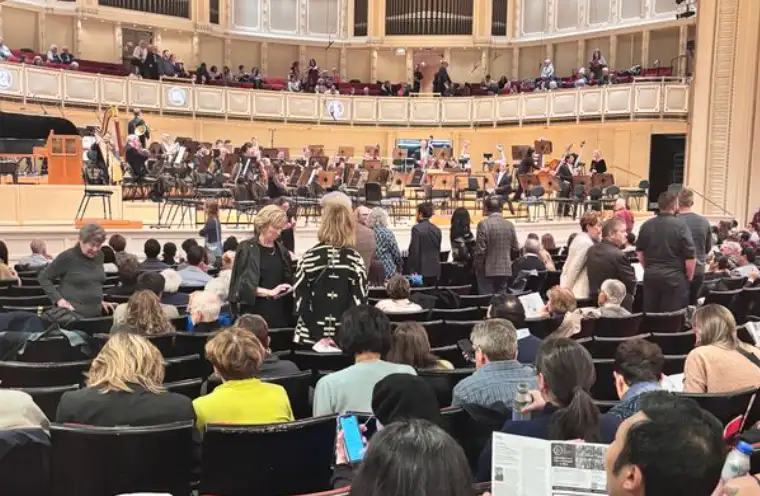
Also in my line of sight was the area known as the Gray Terrace, which features roughly four rows of seating for patrons just behind the stage. And as magical as the music was, I couldn’t help but notice that my mind would temporarily wander to those four rows of people –– the man whose shiny watch would routinely catch the light in the dark and the couple in the fancy dress and business suit and the man that sat alone but didn’t seem to care.
He was mesmerized –– and like I said, so was I.
What merch is available?
I’m not entirely sure if I expected to see Ma’s still adorable face splashed on a slew of T-shirts, tote bags and posters at a merch table or not –– but there was nothing of the sort that I could find at the venue.
The closest thing I saw that resembled merch was a handful of CSO pins and stickers sitting haphazardly in a basket next to the bar.
But make no mistake –– I did find out after the fact that there is a Symphony Store located at the Adams Street entrance to the venue. It is open during all CSO concerts, selling “exclusive music-themed gifts and classical music merchandise sourced from around the world,” according to the CSO website.
What do fans wear to the Yo-Yo Ma concert?
I was so looking forward to seeing what everyone would wear to this particular concert. I had grand ideas of ball gowns and tuxedos, but as soon as I walked in, I was hit with a reality check.
Basically, most people looked business casual with a twist. Most women wore dress pants and cute blouses, while most men wore dress pants and collared shirts.
Obviously, at any mass gathering, there is always a fair share of people who stand out in terms of clothing and such. There was the forty-something woman in the sequined dress who didn’t seem to get the memo that a night at the orchestra ain’t what it used to be, the twenty-something with the SpongeBob SquarePants backpack, and who could forget the twenty-something who was undoubtedly wearing his best pair of jeans.
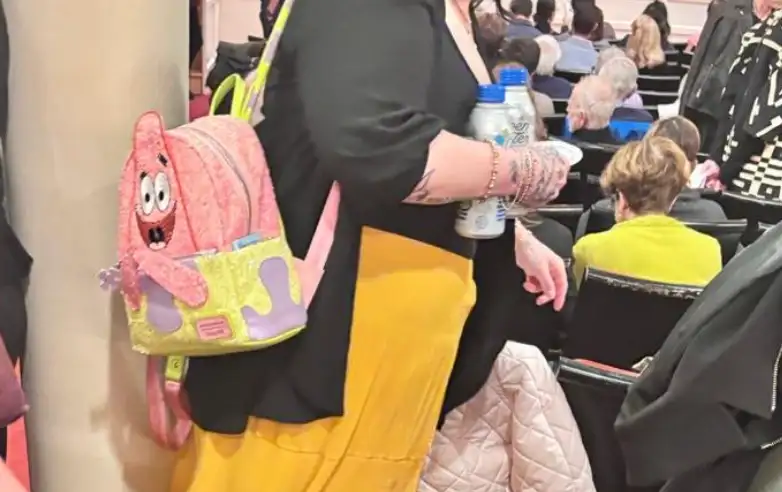
But if you're wondering what to wear, I'd still recommend wearing something nicer than jeans even if it’s not mandatory.
What is proper orchestra concert etiquette?
Another thing I wish I had known a little more about before walking in was orchestra etiquette. When the music stops, don’t immediately clap. Chances are the musicians have just reached a pause in the music, and the silence is part of the fun. So, whatever you do, don’t clap –– that is, until the fancy person sitting next to you claps first.
Also, go to the bathroom before the show starts. This is not the type of show where you can get up and down at your leisure, unless you want hundreds of condescending eyes staring at you.
Lastly, keep that phone tucked away. Photography and video recording were prohibited during the performance –– and believe me when I say, the ushers are watching you like hawks. Besides, I couldn't get a Wi-Fi or cellular connection inside the concert hall. I mean, my iPhone went into SOS mode. And that was plenty fine with me, as I was there to not only enjoy the music without distraction, but bask in the reality of people coming together over a shared love of music.
Is a Yo-Yo Ma concert family-friendly?
If ever there were a concert that one should take their kids to, it would be this one. Not only is it a perfect example of art and music at its finest, but it’s also a lesson in how a civilized society is meant to act, in its most perfect form.
Okay, maybe I just went overboard.
But yes, as much as I would suggest to “Bring the kids!” I do so with the caveat that not every kid is meant to attend a CSO concert. The handful of children that I saw in attendance seemed genuinely comfortable in an environment where their listening skills have never been so important.
Can your child sit quietly during the second, third and fourth dances of Estancia without needing a bathroom break? Will your child be able to hold any and all bodily noises during the silence of a solo cello? Are you willing to step outside and miss seeing a world-class musician if your well-meaning child gets antsy?
If so, bring them.
If not, leave them at home.
What to know about seeing a concert at Symphony Center
As with any concert, having a game plan is always important. And attending a concert at Symphony Center is no different.
What is it like getting into Symphony Center?
Entering any venue comes with a high chance of confusion and chaos, but entering Symphony Center was as refined as one might expect. Tickets were scanned without issue and there was no formal security check, as far as I could tell. As I walked in, ushers quickly escorted me into the concert hall, where a pre-concert conversation was being held for anyone interested in finding out more about the night that was to come.
Surprisingly, during this portion of the evening, one could sit anywhere –– and the main floor of the venue looked about half full at the time. Once the conversation was over, patrons rose from their chairs and made their way to the lobby, where they were met with a large contingent of patrons just arriving and eagerly looking to make a stop at the concessions before heading to their seats.
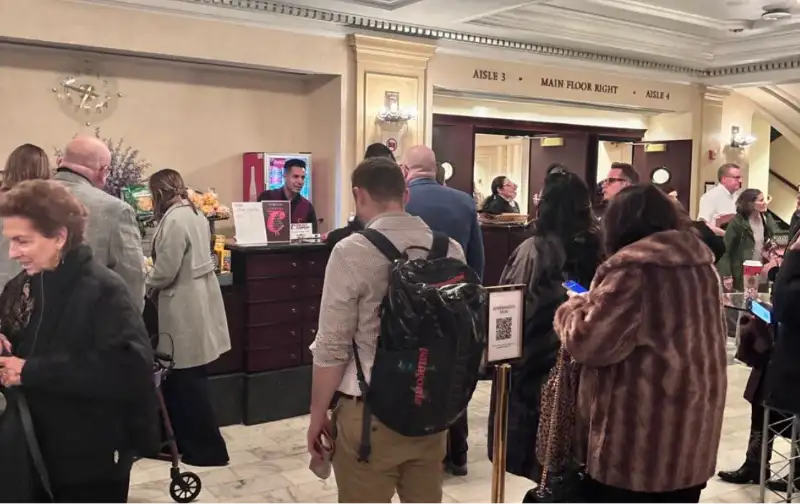
There was a coat check where longtime patrons seemed to reunite with the woman taking their outerwear for a couple of hours. There was also a concessions area with a selection of alcoholic and non-alcoholic drinks, along with snacks such as popcorn and candy for purchase –– but please pay attention here. I did walk in with my box of M&Ms but was not allowed to bring in my Diet Coke. Apparently, drinks were not allowed inside the concert hall except for the branded bottled water available for purchase.
Where should you sit for a concert at Symphony Center?
My seat for the night was located on the Main Floor Left, Row O, Seat 29 –– and my reasons for loving this seat were many. First off, it was directly on the aisle, which I loved. I also personally appreciate an escape hatch of sorts at all times. But yes, the vintage seats and their proximity to one another made for a lot of standing and moving out into the aisle to let people in and out.
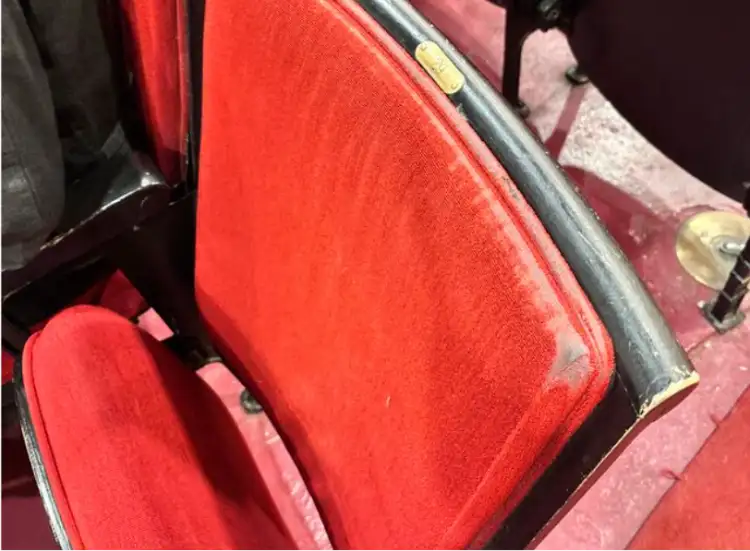
But yes, I survived.
I could nearly see the entirety of the stage, except for a slight sliver of it blocked by a pole to my left which partially blocked my view of the pianist, whom I found somewhat intriguing thanks to her playing and her gorgeous black pantsuit.
Besides the main floor seats, there were multiple levels of seating above me, along with the seats already discussed right behind the musicians. And while sightlines may vary depending on your seat, you are going to be able to see and hear the magic as it happens–– so don’t stress.
Another important note –– if there is an empty seat next to you once the show starts, don’t get too excited. I saw a number of ushers take those empty seats for themselves once the lights went down, all eager to witness the magic of Ma.
What should you know about getting to and from Symphony Center?
Heading into downtown Chicago from the western suburbs on a rainy Wednesday night during rush hour is no picnic. Driven by my trusty chauffeur –– my husband –– I knew we were in for a lengthy ride, and the long line of brake lights on the Stevenson Expressway more than confirmed my suspicions. We left around 5 p.m. and I was dropped off at the front door of the Symphony Center around 6:30 p.m. As it was roughly an hour before a sold-out show, I assumed there would be a crowd out front, but it was oddly quiet –– much to my delight.
Leaving was a bit chaotic –– but nothing I wouldn’t expect for a venue located directly on the always-bustling Michigan Avenue. Therefore, I ended up meeting “my chauffeur” a block north of the venue, where the rush for Lyfts and Ubers wasn’t nearly as crazy.
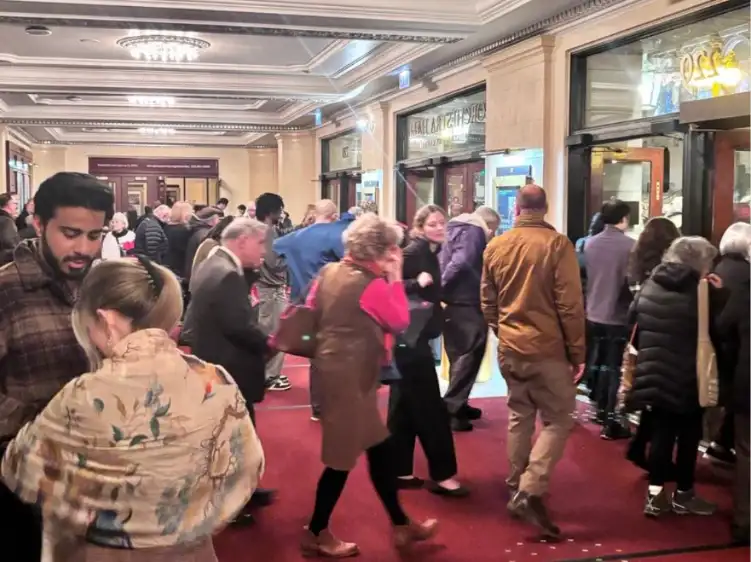
Want to know the coolest part of the end of my evening? While I waited for my ride, I had the time to watch the members of the CSO walk out the door and back into the obscurity of their everyday lives with their instruments strapped to their backs.
How to buy Yo-Yo Ma concert tickets on SeatGeek
The man is 71 years old, and you ain’t getting any younger either. So, get the damn tickets.
Start by heading over to the Yo-Yo Ma artist page on SeatGeek and checking his tour schedule to see if the talented musician is headed your way. Once you find your show, choose how many tickets you need and use the interactive venue map to find the tickets that work best for you. Once you’re happy with your choice, hit checkout and start picking your outfit.
Just try and wear something nicer than jeans.
📁 Categories: Front Row, Concerts
🏷️ Tags: Yo-Yo Ma, Chicago Symphony Orchestra, Chicago Symphony Center, Chicago

Tricia Despres
Tricia Despres has made a living out of loving music. A Chicago-area freelance journalist with more than three decades of storytelling under her belt, her work has appeared in PEOPLE, American Songwriter, St. Louis Magazine and numerous regional publications. She's interviewed some of music's biggest names and covered everything from intimate performances to sold-out arena shows. When it comes to live music, she likes long concerts, short rides home and comfy seats by the stage.