How concert stage layouts change the best seats: B-stages, catwalks and 360-degree setups explained
Jul 30, 2026
·Emily Kho

The closest seat is not always the best seat at a concert.
You can pay for the floor and spend the night looking between raised phones. You can sit halfway across the arena and suddenly find the artist performing a few feet away on a B-stage. You can even buy a seat that appears to be behind the stage, only to discover that an in-the-round production faces every direction.
That is why stage layout matters more than many fans realize. B-stages, catwalks, thrusts and 360-degree setups can completely change which sections have the best views, which expensive seats come with drawbacks and where the real value is hiding.
A few minutes spent understanding the stage can be the difference between watching the show from the perfect spot and wondering why the best moments keep happening somewhere else.
How concert stage layouts change the best seats in the venue
Many tours now build a stage specifically for the show rather than simply placing a platform at one end of the venue.
Understanding that layout helps you see how the performance will move through the crowd before you choose where to sit.
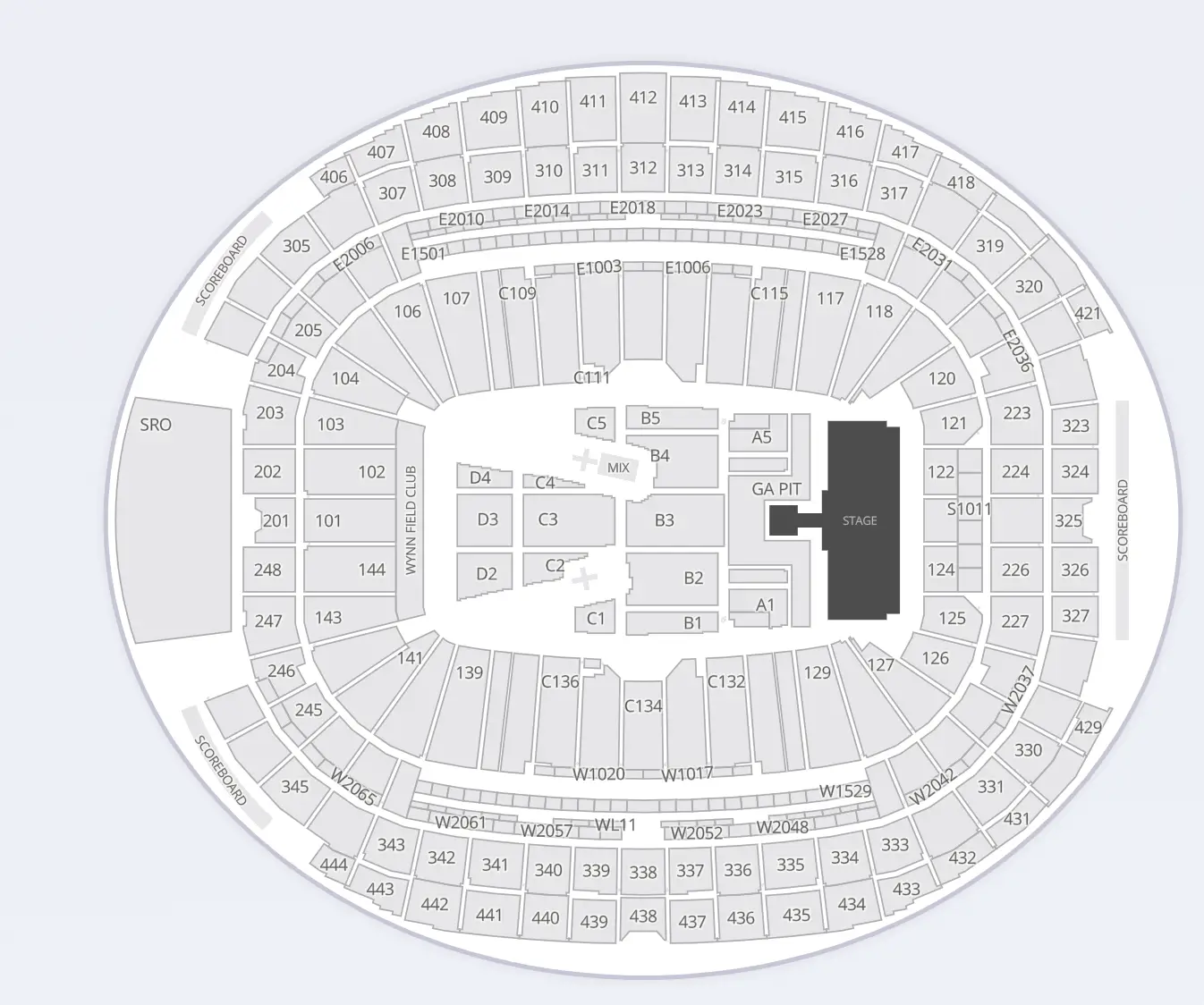
Traditional end-stage layouts
This is the setup most fans picture when they think of a concert, with one stage at the end of the arena or stadium and everyone facing forward.
Centered lower-bowl seats are often the safest bet because you can see the artist, screens and full production without looking through a packed floor. You may be farther away, but the view can feel much cleaner.
Side-stage seats can be a good value when they are slightly in front of the stage. Just check the listing first, since you may lose part of the video wall or some of the choreography.
AC/DC’s "Power Up Tour" offers a clear example, with the band performing from one end of the stadium and most fans facing the stage head-on.
B-stage layouts
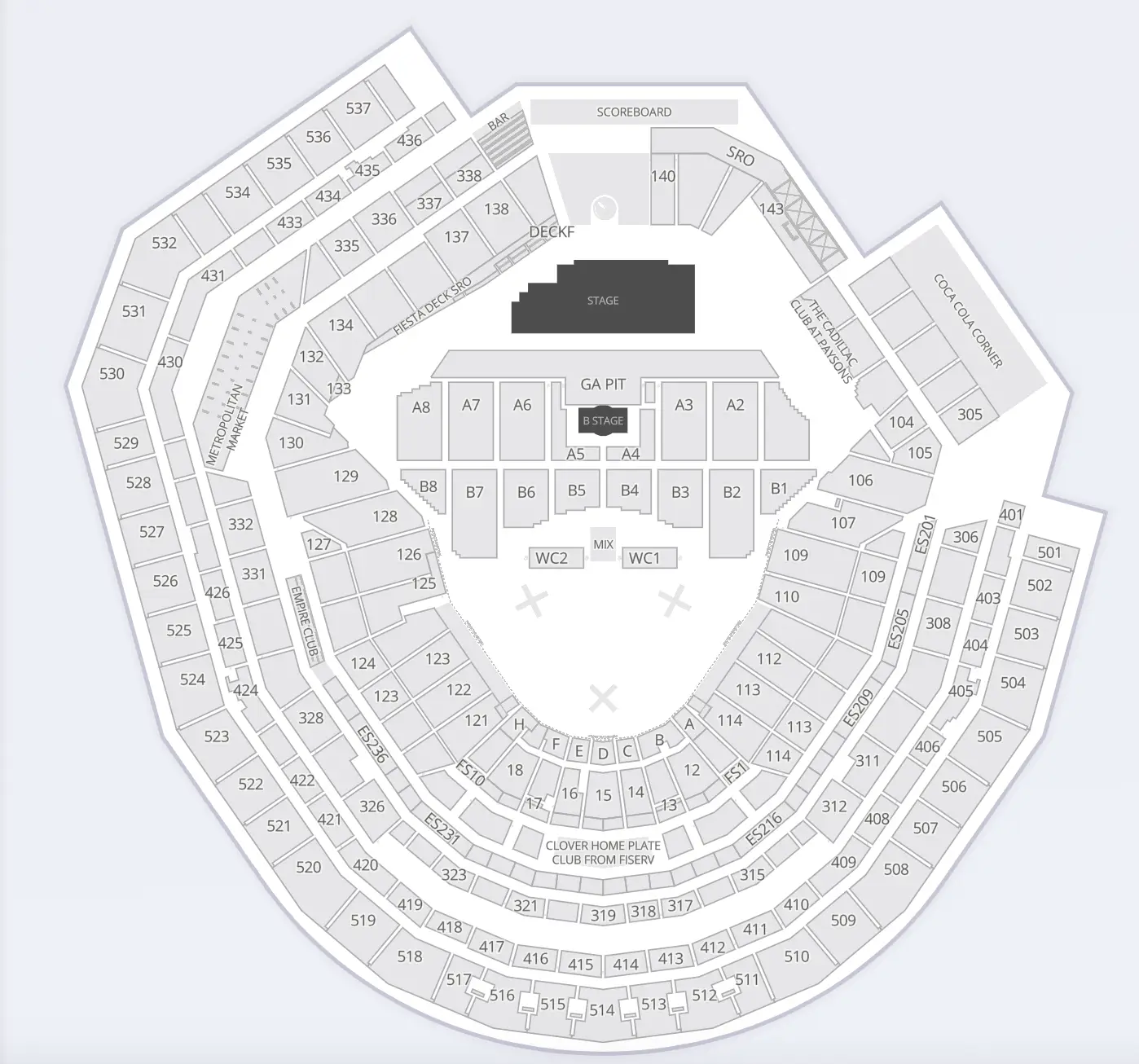
A B-stage is a smaller stage placed somewhere away from the main one, usually near the middle or back of the floor.
This is where an ordinary-looking seat can suddenly become incredible. The artist may appear just a few feet away for an acoustic set or a handful of songs, giving that part of the arena its biggest moment of the night.
That close-up moment may only last a few songs, so check videos from earlier shows to see how often the B-stage is used and which way the artist tends to face.
My Chemical Romance’s "Long Live The Black Parade Tour" uses a B-stage that brings the band and drum kit closer to fans during the second half of the show.
Catwalk and thrust stage layouts
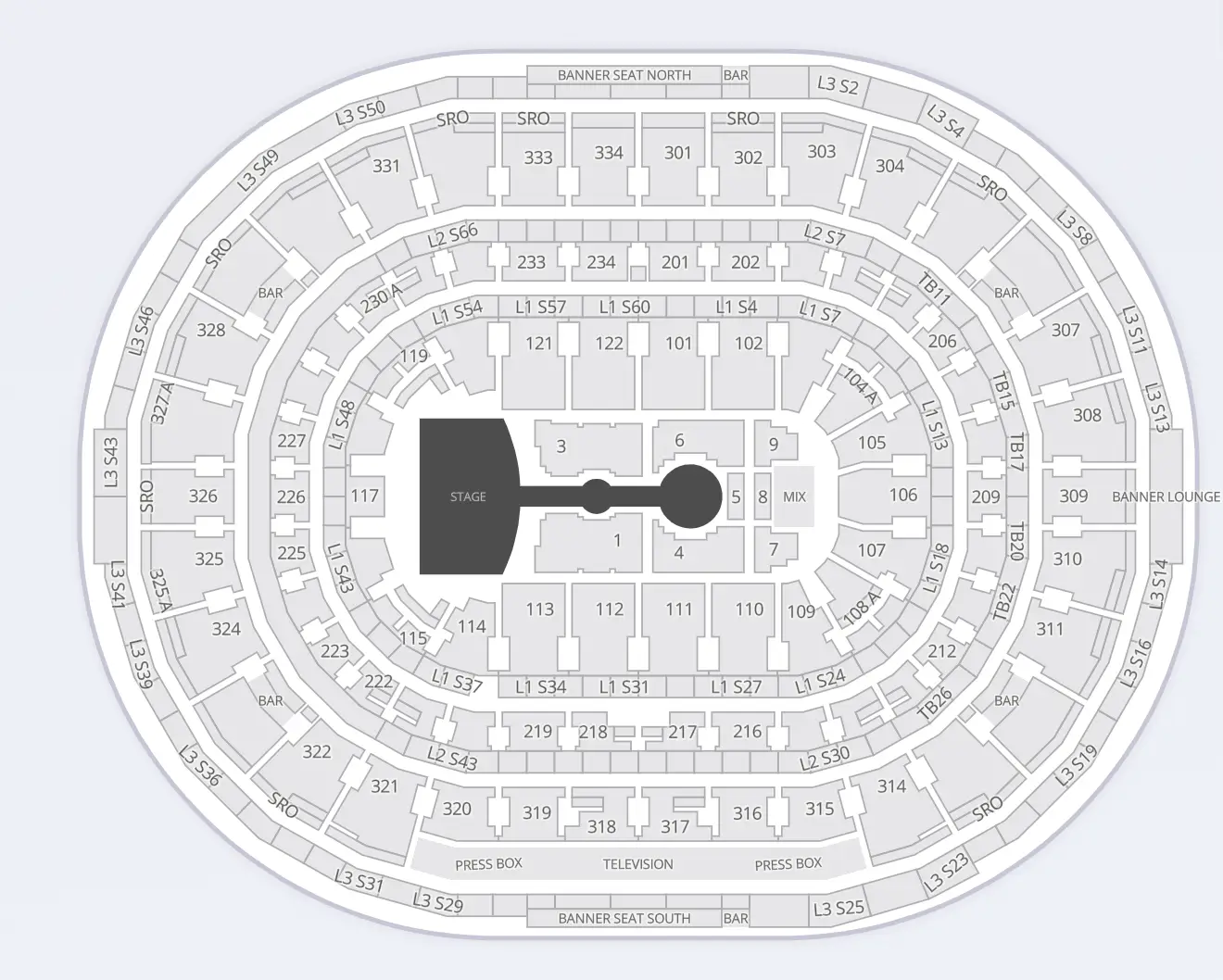
Catwalks and thrust stages bring the performance farther into the crowd. A catwalk is usually a narrow runway, while a thrust is wider and may be used for full songs.
Seats along the extension can put you incredibly close when the artist walks past or stops nearby. Lower-bowl seats beside it can be just as appealing because you get that proximity without having to look over a standing floor crowd.
Still, being next to the catwalk does not mean the artist will spend the whole night in front of you. Look at earlier shows to see where they stop most often.
Ariana Grande’s "Eternal Sunshine Tour" uses a long central catwalk that carries the performance into the middle of the floor before reaching a circular B-stage.
360-degree and in-the-round layouts
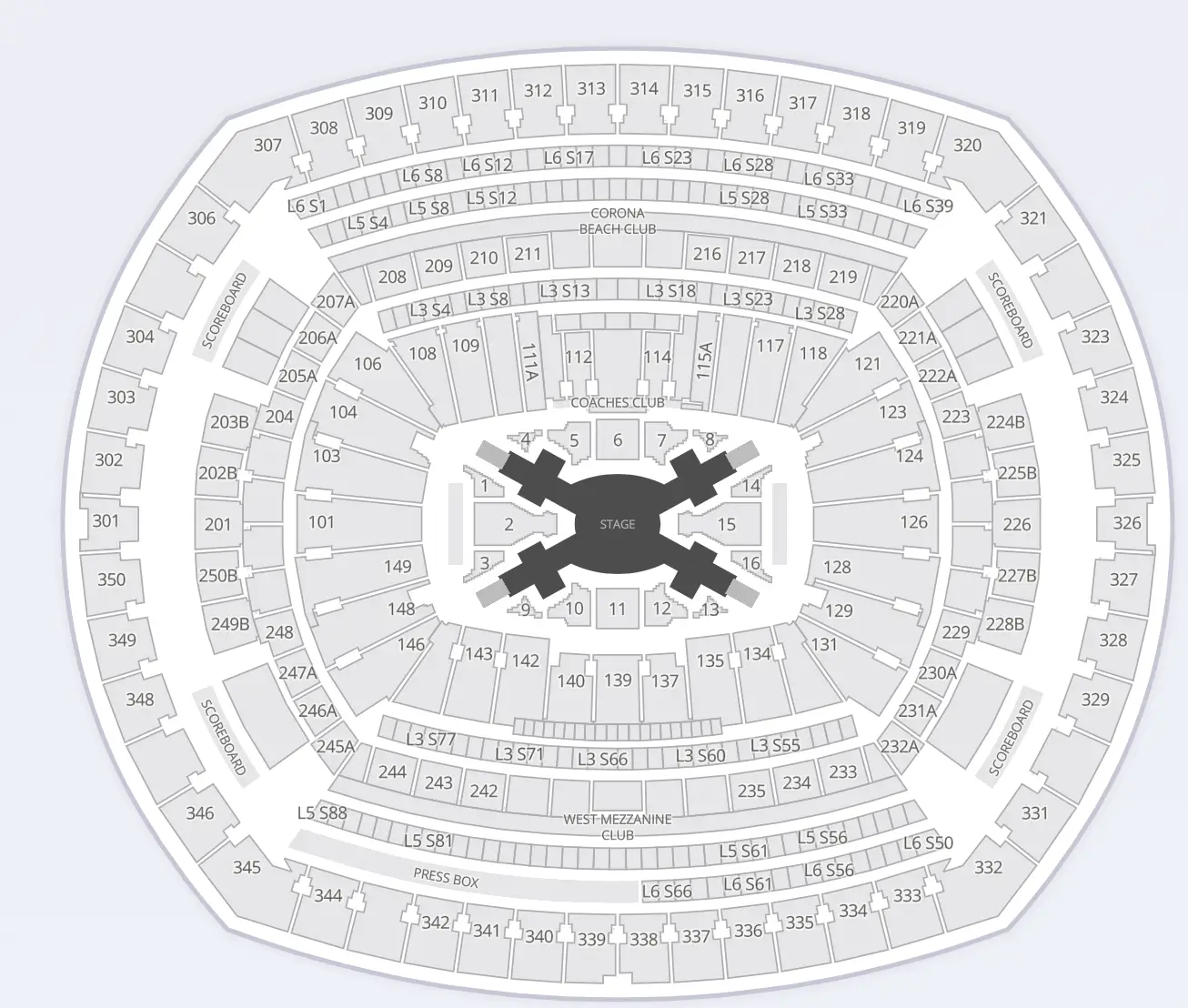
An in-the-round stage sits near the center of the arena with fans on every side.
That completely changes the usual seating rules. Sections that would normally be behind the stage can suddenly face the action directly, and upper-level seats may feel much closer because the stage is no longer at the far end of the building.
Not every side is exactly the same, though. Some stages rotate, while others stay fixed and favor one direction. Instruments, speakers and equipment can also get in the way from certain angles.
BTS’ "Arirang World Tour" uses a 360-degree in-the-round stadium stage, placing fans around the entire production instead of facing it from one direction.
Diamond and custom stage layouts
Some tours place a diamond at the center of the floor, while others use curved runways, connected platforms, moving pieces or several separate performance areas.
These setups can create great seats in places you would not expect. A spot near one point of a diamond may put you directly along the artist’s path, while a section beside another extension could face a screen, equipment or an area used only briefly.
Because every design works differently, the seating map only tells part of the story. Once the tour begins, look for wide shots that show how the artist moves between each part of the stage and where they spend the most time.
Morgan Wallen’s "Still the Problem Tour" shows the more customized side of this category, with an LED floor and an airplane-shaped B-stage built into the stadium production.
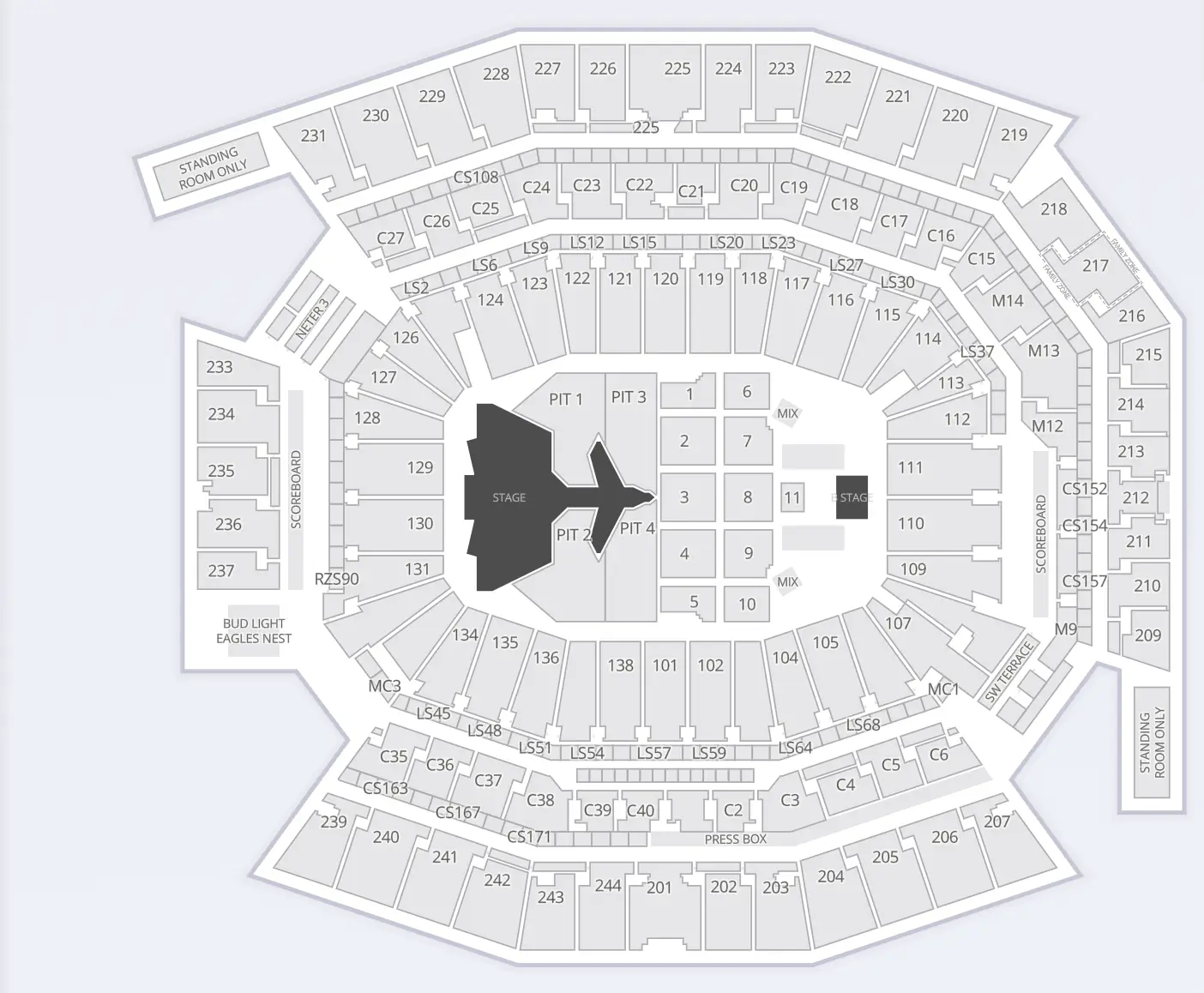
How to research a concert stage layout before buying tickets
Start by opening the concert on SeatGeek and looking at the event-specific seating map. It gives you a better idea of where that tour’s main stage, catwalk, B-stage or in-the-round setup will be positioned than a general venue map.
Once the tour has started, check wide-angle photos and videos from earlier dates. Look for clips that show the full stage instead of only the artist so you can see where the performer spends the most time and which direction they face.
Recent Reddit threads, fan forums and tour discussions can add details the map may not show. Fans often share which side of a catwalk gets the most attention, how many songs happen on the B-stage and whether an in-the-round platform rotates.
Keep in mind that the layout can change slightly between venues. A catwalk may be shortened, a platform may move or certain production elements may be adjusted to fit a smaller building.
How to find the right concert tickets on SeatGeek
The best seat at a concert might be beside the catwalk, across from the B-stage or in a section other fans overlook. Once you understand how the stage is set up, SeatGeek’s tools can help you compare those options and find the view that fits your budget.
1. Search for the concert you want to attend. Open SeatGeek, find the artist and select the date and venue that work for you.
2. Study the event-specific seating map. Look at the shape of the stage and where each section sits around it. Check for catwalks, B-stages, in-the-round setups and any unusual extensions before focusing on price.
3. Compare the view, not just the distance. A lower-bowl seat near a B-stage may put you closer to the artist for part of the show than a more expensive floor ticket. A side-stage seat can also be a strong option when the angle is open, while sections that would normally be behind the stage can become direct-facing seats when the production is in the round.
4. Use View From Seat photos to preview the angle. Photos from nearby sections can help you understand the elevation, distance and sightline before you choose.
5. Use Deal Score to compare listings. Deal Score helps you weigh price and location, which is especially useful when the obvious seat is not necessarily the best one.
6. Review the ticket details before checkout. Confirm the section, row and quantity, and check for any side-view, limited-view or obstructed-view notes.
7. Set a price alert if you are not ready to buy. If the right section is still outside your budget, track the concert and watch for price changes or new listings.
8. Buy with the Buyer Guarantee behind your order. Eligible SeatGeek orders are backed by the Buyer Guarantee, giving you added protection if there is an issue with your tickets.
Once the lights go down, the stage layout decides where the biggest moments happen. Pick the right spot, and one of them might happen directly in front of you.
📁 Categories: Concerts