Apr 8, 2026
·Mary Callahan
Buying tickets online should feel simple, not stressful. But when you need accessible seating, the process can feel less clear than it should. Terms vary by venue. Seat maps can look different from one event to the next. And many fans want to make sure they are choosing seats that truly fit their needs before they check out.
The good news is that buying accessible seating online can be straightforward when you know what to look for. Whether you are shopping for a concert, comedy show, Broadway performance or sporting event, a little preparation can help you compare options, understand the seating available and feel more confident before you buy. SeatGeek can make that process easier to navigate, with tools like interactive seat maps and filters that help narrow listings to accessible seating options.
In this guide, we will break down what accessible seating means, what to check before checkout and how to buy accessible tickets online with more confidence. Because accessible seating availability, layout, and terminology can vary by venue and event, it is always worth reviewing each listing carefully before you purchase.
What is accessible seating?
Accessible seating is designed for guests who need accommodations to attend a live event more comfortably and safely. These seats can include wheelchair-accessible locations, companion seats, aisle transfer seats and other seating arrangements intended to support different access needs.
The exact setup depends on the venue. For example, one venue may offer wheelchair spaces with adjacent companion seating on a main concourse, while another may place accessible seating across multiple levels with different sightlines and entry routes.
That is why it is important to review the ticket details carefully and think about the full event experience, not just the seat location itself.
What to look for when buying accessible seating online
When you are comparing ticket options, focus on more than the section and price. A good accessible seat is about fit, convenience and comfort.
Here are the main things to review before you buy.
Check the ticket listing details
Start with the listing description. Look for language that explains the seating type, such as whether the ticket is wheelchair accessible or a companion seat.
This matters because not every accessible listing is the same. Some are intended for the guest using a wheelchair, while others are specifically designated for someone attending with them.
If the listing includes special notes, read them closely before purchase.
Review the seat map carefully
Interactive seat maps can help you understand where accessible seating is located within the venue. Use the map to compare sections, levels, and proximity to major venue features.
A seat map is most useful when you use it to understand the bigger picture, not just the section number. It can help you compare how close different options are to entrances, elevators, restrooms, and other amenities that may affect your overall experience.
Consider the full venue experience
A seat can look great on a map and still not be the best option for your night. Try to think through the full experience from arrival to departure.
Ask yourself:
How will I enter the venue?
Will I need elevator access?
Do I want to avoid steep ramps or long walks?
Would a quieter or less crowded area be more comfortable?
Will I want quick access to restrooms or concessions?
Accessible seating is about more than where you watch the event. It is also about how easy the entire night feels.
Think about companion seating
If you are attending with friends or family, companion seating is an important part of the planning process. Many venues provide companion seats next to accessible locations, but availability and configuration can vary.
If staying together is important, make sure the ticket setup matches your group’s needs before checkout. This is especially helpful for high-demand events, where accessible inventory may be more limited.
Compare price and convenience together
The lowest-priced accessible ticket is not always the best value. Sometimes paying a little more for a more convenient section can make the event much easier to enjoy.
For example, a seat with a simpler route from entry to section, better access to amenities or a more comfortable location for your needs may be worth the difference. When comparing options, think in terms of overall experience, not just ticket cost.
Common mistakes to avoid when buying accessible tickets
Buying accessible seating online can feel much easier when you know what pitfalls to watch for. These are some of the most common mistakes shoppers make, and how to avoid them.
1. Assuming all accessible seats are the same
Not all accessible seating is configured the same way. One listing may be designed for a wheelchair user, while another may be a companion seat next to an accessible space. Some seats may offer easier access to elevators, restrooms, or concourses than others. Even within the same venue, two accessible seating options can offer very different experiences.
Before you buy, make sure you understand exactly what kind of ticket you are viewing and whether it matches your needs.
2. Focusing only on price
Price matters, but the cheapest accessible ticket is not always the best choice. A lower-priced seat may be farther from the entrance, require a longer route through the venue, or be less convenient for restrooms, concessions or exits.
A slightly more expensive ticket in a better location may deliver a much smoother experience overall. When comparing listings, think about value in terms of comfort, convenience and ease of access, not just the final price.
3. Not reading the listing details carefully
When tickets are selling fast, it is easy to rush through checkout. But accessible seating is one area where the details really matter. Important information is often included directly in the listing, and skipping over it can lead to confusion later.
Take a moment to review the seat type, section, row and any notes attached to the ticket before completing your purchase.
4. Not checking the seat location in context
A seat number alone does not tell the whole story. Where the section sits within the venue, how close it is to entrances or elevators, and how easy it is to reach nearby amenities can all affect your experience.
Use the seat map to understand the full context of the listing before you buy, not just the row and section.
5. Assuming every venue handles accessibility the same way
A setup that worked well at one arena, stadium, or theater may be completely different at another. Accessible seating locations, entry routes, elevator access, and nearby amenities can all vary from venue to venue.
That is why it is worth reviewing each event on its own terms instead of relying on past experience. A little extra research can help you avoid surprises on event day.
How SeatGeek makes it easier to find the best accessible seats
Finding accessible seating online can feel complicated, especially when venue layouts and seat labels vary from event to event. SeatGeek makes that process easier with interactive seat maps that let shoppers view available tickets in the context of the full venue. Instead of comparing listings in a vacuum, fans can better understand where accessible seating is located and choose seats based on what matters most to them, whether that is easier entry, proximity to amenities or a location that fits the experience they want.
For venues where SeatGeek is the primary ticketing provider, more accessibility information may be available directly on the event page, including dedicated ways to narrow listings to accessible seating. For many other venues and events, those details can vary and may only appear when a seller includes them in the listing. That is why it is a good idea to review ticket details carefully and contact the venue directly if you have specific accessibility questions. Venue websites may also have additional accessibility information that can help before you buy.
SeatGeek also helps shoppers buy with more confidence by pairing listings with clear ticket details. That makes it easier to review the seating type, compare options and look more closely at the setup before checkout. When accessible-seating tools are available on the event page, they can help shoppers narrow in on relevant listings faster. For fans searching for accessible seating, having that extra context can make a big difference when deciding between sections and weighing comfort, convenience and value.
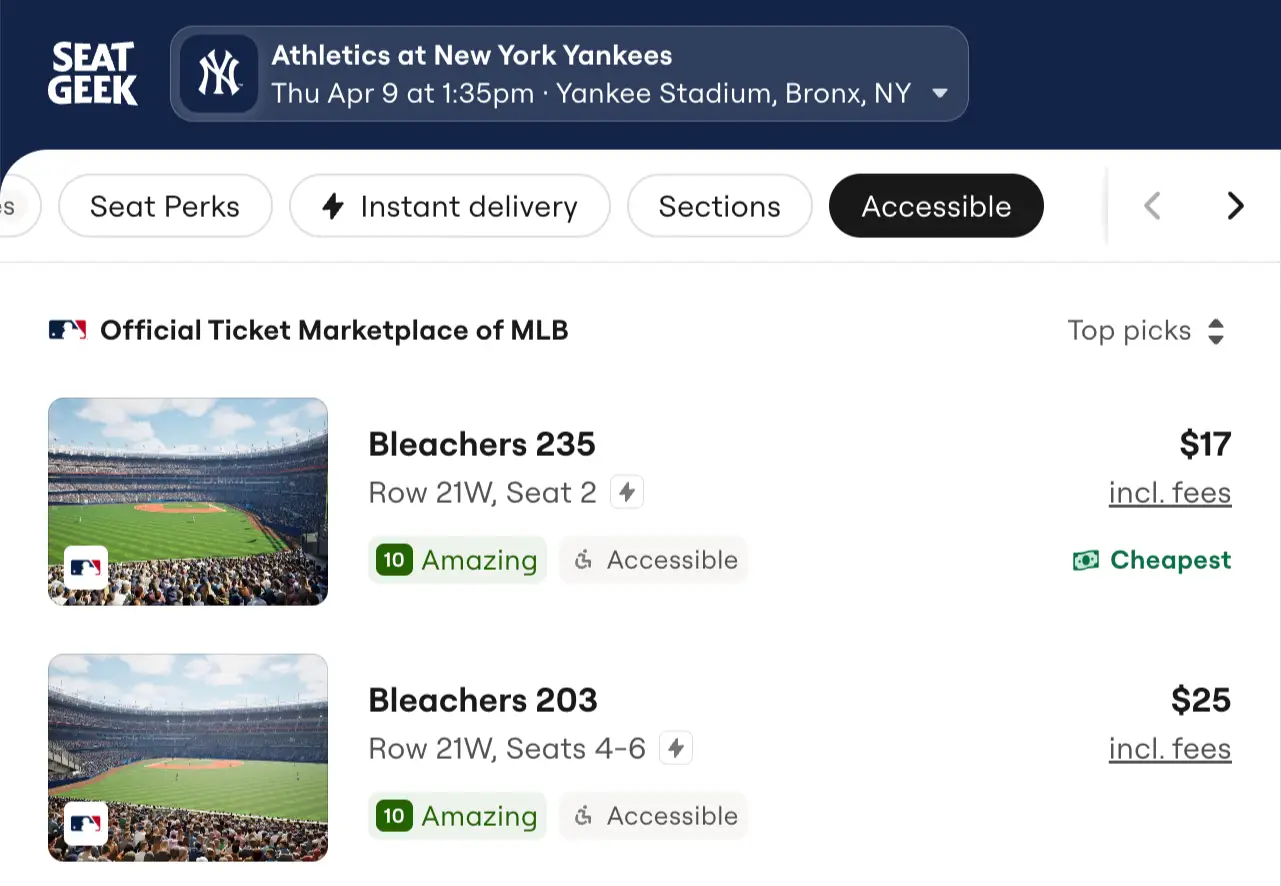
Because SeatGeek brings seat maps, listing information and ticket options together in one place, it is easier to compare accessible seats and find the right fit for your needs. Accessible seating can vary by venue, but the right tools can make the process feel more straightforward and help fans shop with greater confidence. When those tools are available, they can give shoppers both a high-level view of where accessible seating is located and a faster way to narrow in on relevant listings.
How to get accessible tickets on SeatGeek
If you are ready to start shopping, here is how to look for accessible ticket options on SeatGeek.
Keep in mind that the available tools can vary by event. For venues where SeatGeek is the primary ticketing provider, you may see more accessibility information directly on the event page, including dedicated ways to narrow listings to accessible seating. For many other venues and events, those details may only appear in the seller’s listing.
Search for the event you want to attend on SeatGeek.
Open the event page and view the available tickets.
If the event page includes an Accessible option, use it to narrow your results. Depending on the event, you may be able to tap the “Accessible” filter chip near the top of the listings or open the Filters menu and check the “Accessible” box.
Read each listing carefully to understand the seating type, including whether it is wheelchair accessible or companion seating.
Compare sections based on your priorities, such as entry convenience, amenities and overall location.
Select the tickets that best fit your needs and review the details before checkout.
Complete your purchase on SeatGeek and save your tickets in your account for event day.
If you still have questions about accessibility details for a specific event or venue, contact the venue directly and check its website for the most current information.
Accessible seating can vary by venue and event, but taking a little extra time to review the listing and seat map can help you buy with more confidence. When you know what to look for, it becomes much easier to choose seats that work for your needs and enjoy the live event experience with less stress.